Nature is becoming economically visible: three forces behind the shift
Nature has always underpinned the economy. In the past three years, it has also become economically visible. Three developments have converged to change what companies can know about their exposure.
Nature has always been economically foundational. What has changed is that it is now becoming economically visible, and that shift has happened in a very short span of time. Three developments have converged to make this possible: the disclosure architecture, physical losses, and data. Each would be significant on its own. Together, they bring nature into the core of how organisations understand risk.
Genevieve Patenaude speaking at the Lloyds Banking Group and TNFD roundtable, New York Climate Week 2026.
1. The disclosure architecture has arrived
The Taskforce on Nature-related Financial Disclosures (TNFD) published its recommendations in September 2023. Three years on, more than 1,000 organisations across 56 jurisdictions are making TNFD-aligned disclosures, twice as many as a year earlier. A further 802 organisations, including financial institutions with USD 26.6 trillion in assets under management, have formally committed as TNFD Adopters.
The International Sustainability Standards Board (ISSB) has since moved nature into its own work. In November 2025, it began standard-setting that draws on the TNFD recommendations, metrics and guidance. In April 2026, it agreed to publish nature-related requirements as an IFRS Practice Statement supporting IFRS S1, with an exposure draft targeted for October 2026.
That is nature moving from a voluntary framework towards the global baseline for sustainability reporting in under three years, a pace rarely seen for an initiative of this kind. Disclosure has given boards, investors and lenders a shared language for nature-related risk.
2. Physical losses are arriving earlier than anticipated
The second development is the least comfortable. Physical losses linked to nature are arriving much earlier than anticipated. Drought, water stress, and soil degradation are no longer modelling exercises, and the recent landslides in Nepal made that plain. In 2026, drought across the western and central United States caused an estimated USD 2.7 billion in damage between January and September, according to preliminary figures from Climate Central.
These losses concentrate where an operation depends on a particular water source, soil or ecosystem. Our evaluation of nature therefore needs to be more detailed and more accurate than ever, tied to the specific places where a business operates and sources.
3. The data can now cover a whole portfolio
The third development makes the first two workable. We now have access to outstanding environmental datasets, built over decades at a cost of billions, in analysis-ready archives. With cloud computing, we can run consistent, comparable and auditable assessments across an entire portfolio, rather than piecemeal, one site at a time.
Satellite imagery has a particular role. Climate has a single, globally agreed unit: a tonne of carbon dioxide equivalent. Nature has no equivalent. A wetland, a forest or a river basin carries a different value and a different risk depending on where it is, so nature needs a location-specific measurement system.
Only one technology observes every location on Earth on a repeated cycle: satellites. That is what lets us work at the portfolio level and answer a practical question. Of thousands, or tens of thousands, of sites, which carry the most financial exposure?
Businesses operate within nature systems. Satellite observation lets us see those systems at the scale a portfolio demands.
From thousands of sites to the few that matter
In practice, these three developments support a simple sequence: screen widely, then prioritise.
Last year, Lloyds Banking Group collaborated with us to analyse 5.1 million hectares of farmland, identifying more than 1.2 million hectares with resilience-building potential. Before the study, Lloyds had visibility into about 1.5% of its farming clients. Afterwards, it had a consistent view across more than 46,000 farming businesses. Lloyds launched its Agricultural Transition Finance product alongside the resulting Farming with Nature report.
A second report, The Missing Line Item, that we developed with Lloyds goes deeper into individual assets. For this level of analysis, we combine global datasets with locally specialised ones, and estimate Nature Value at Risk at asset level for three report case studies. The headline finding is that financial exposure changes with location, as well as with industry:
Paper manufacturing: For International Paper, the larger risks sit upstream, in the wood fibre sourcing region that feeds two mills. Because that region sits outside the company's direct control, the response shifts towards sourcing and supplier engagement.
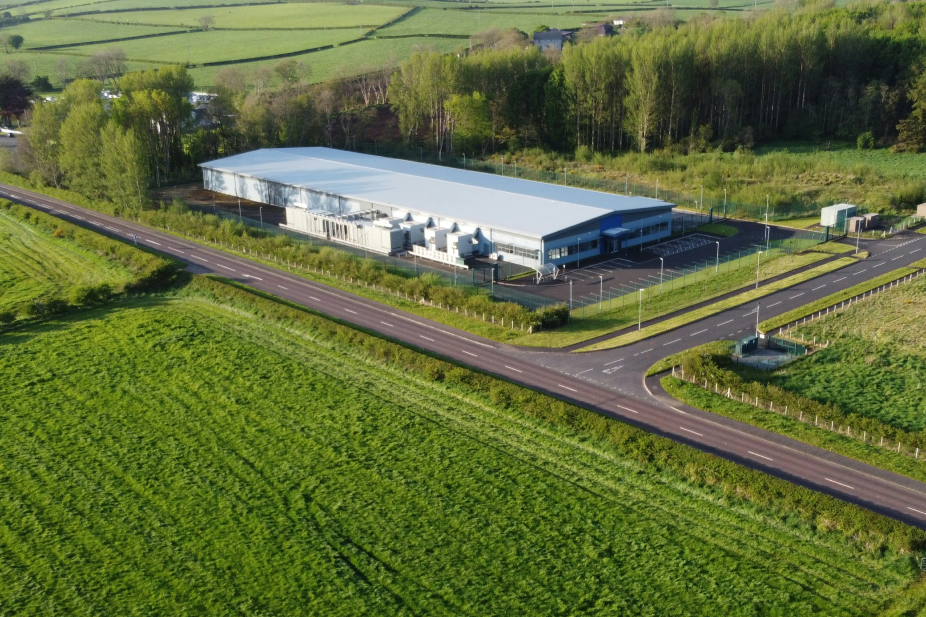
Data centres: Two sites with the same operator and the same water-based cooling technology show very different exposure. The site in Boulder, Colorado, depends heavily on snowpack, and Colorado has just recorded its lowest snowpack in more than 40 years according to the Colorado Climate Center.
Industrial manufacturing: Across three sites in one corporate group, exposure to erosion varies by nearly a factor of two. At the most exposed site, the risks compound: wildfire could remove plant cover, heavy rainfall could then erode the exposed soil, and the sediment could reach a water facility the site depends on.
Site-level analysis is a strong start. Deciding where to act takes a wider view of the landscape and supply chain around each site. Many interventions can reduce these risks, and they begin once a company knows which risks are material.
Where to start
For organisations working out their next step, four priorities follow from this:
Screen the whole portfolio first. A consistent first pass across every site, asset and supply chain location shows where exposure concentrates, before detailed work begins.
Look beyond the fence line. For many companies, the largest dependencies sit in sourcing regions and water catchments they do not directly control.
Connect findings to operational decisions. Procurement, capital planning and supplier engagement are where nature-related insight turns into action, with disclosure following from that work.
Build a baseline you can re-run. With the ISSB exposure draft due, a repeatable, auditable assessment puts organisations in a stronger position as requirements take shape.
This is the start of a journey. Working together and sharing candidly what we are learning is how we will all make progress.
Former associate professor at the University of Edinburgh and contributing author to the IPCC Good Practice Guidance for Land Use, Land-Use Change and Forestry, Genevieve has led multiple research projects focused on solving global challenges.