How to build a credible nature risk profile for your business
A practical, five-step approach to locating, assessing, monitoring, quantifying and evidencing nature-related risk across every site, asset and supply chain location.
Lenders, investors and regulators increasingly expect granular, location-specific evidence of nature-related risk, from the European Central Bank's penalty on Crédit Agricole to Norges Bank Investment Management's expectations for the 7,200 companies it invests in. Read more on why this evidence matters to lenders and investors →
The underlying requirement is the same across all of them: businesses need a credible view of their own nature-related impacts, dependencies, risks and opportunities, supported by evidence they can interrogate and explain.
Five steps to build a nature risk profile with Earth Blox
To move beyond generic nature-related risk assessments, companies need a structured, evidence-based approach to environmental intelligence that connects where the business operates with the environmental conditions, changes and risks associated with those locations. For companies with large asset portfolios or complex supply chains, five steps make that practical.
1. Locate: map your assets and supply chains
Location is the foundation of any meaningful nature-related assessment. The first task is to establish the geographic position of the assets, facilities and supply-chain activities in scope. Depending on the question, that means coordinates for individual sites, asset boundaries or sourcing areas.
Earth Blox allows organisations to bring asset portfolios into the platform and overlay them against high-resolution environmental datasets, providing a more accurate view of exposure across operations and supply chains.
For sustainability and risk teams, this creates the baseline for assessment. For operations and procurement teams, it starts connecting environmental risk to the specific assets and suppliers they manage.
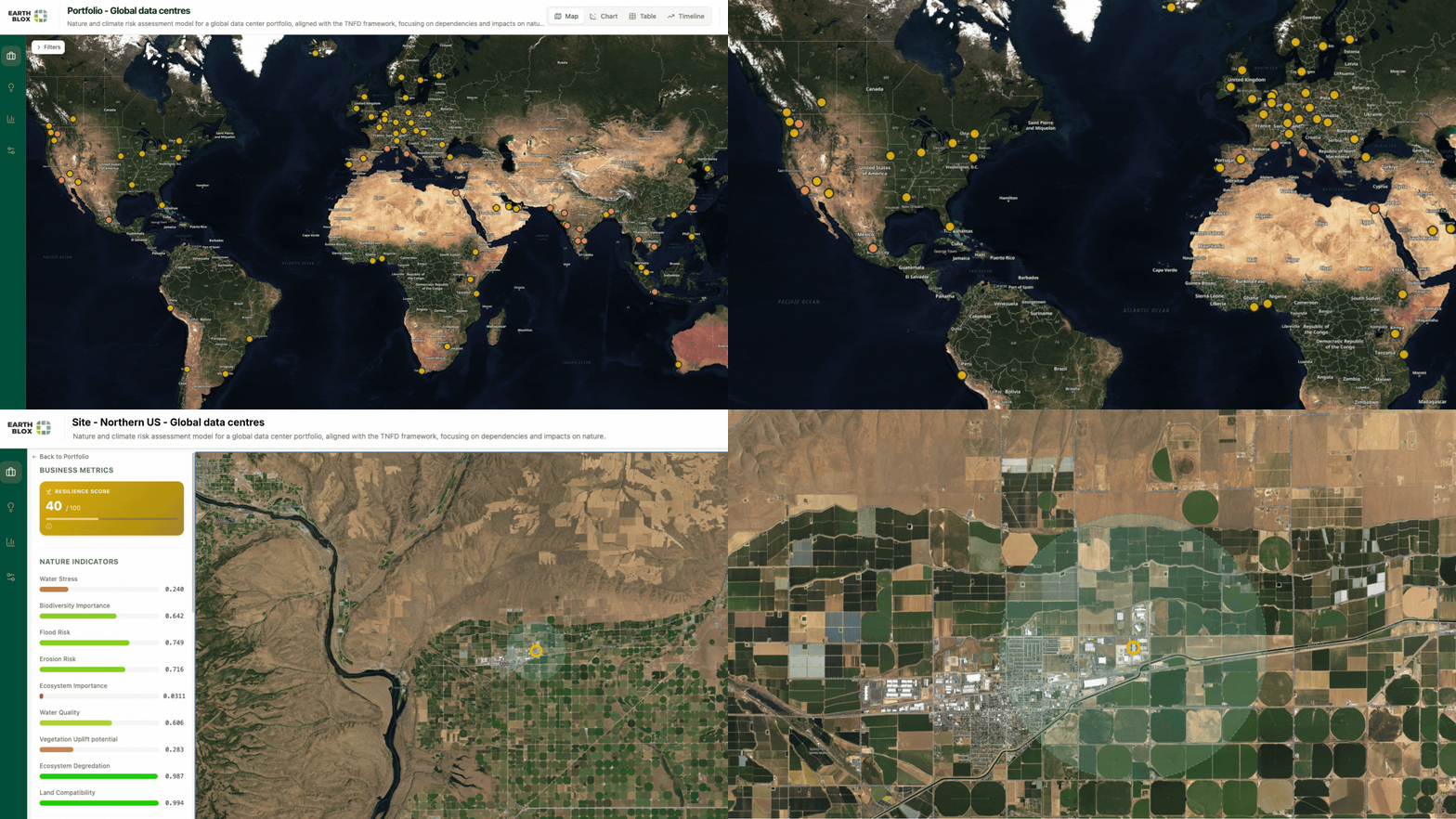
Nature risk for data centres is assessed at global portfolio level and then at a single site on Earth Blox.
2. Assess: understand the environmental context around each location
The next step is to analyse those locations against the datasets relevant to the risks and dependencies being investigated. Depending on the sector, that might include proximity to protected or biodiversity-important areas, land cover, deforestation, water-related conditions or wildfire exposure.
Earth Blox brings data from sources including IBAT, NASA, ESA and UNEP into a single platform, so teams can analyse many locations at once, identify where impacts, dependencies and risks warrant attention, and build evidence for the decisions that follow.
This moves the business beyond a broad indication of potential risk towards a more detailed understanding of what is happening at the locations that matter.
A deep dive into nature risks at a data centre location.
3. Monitor: understand and respond to changing conditions
Nature-related risk is dynamic. Land use changes, forests are cleared or restored, water conditions vary, and wildfires occur. Activity around an asset or sourcing area can change even when a company's own footprint does not. A point-in-time assessment therefore tells only part of the story.
Ongoing monitoring lets businesses track relevant environmental change, identify when defined conditions or thresholds are met, demonstrate active management, and maintain an auditable record of risk oversight.
Using near-real-time satellite datasets and historical archives, Earth Blox enables users to monitor environmental change and receive alerts when predefined thresholds are breached.
This goes beyond reporting, giving risk, operations and procurement teams information they can use to investigate change and decide whether action is required.
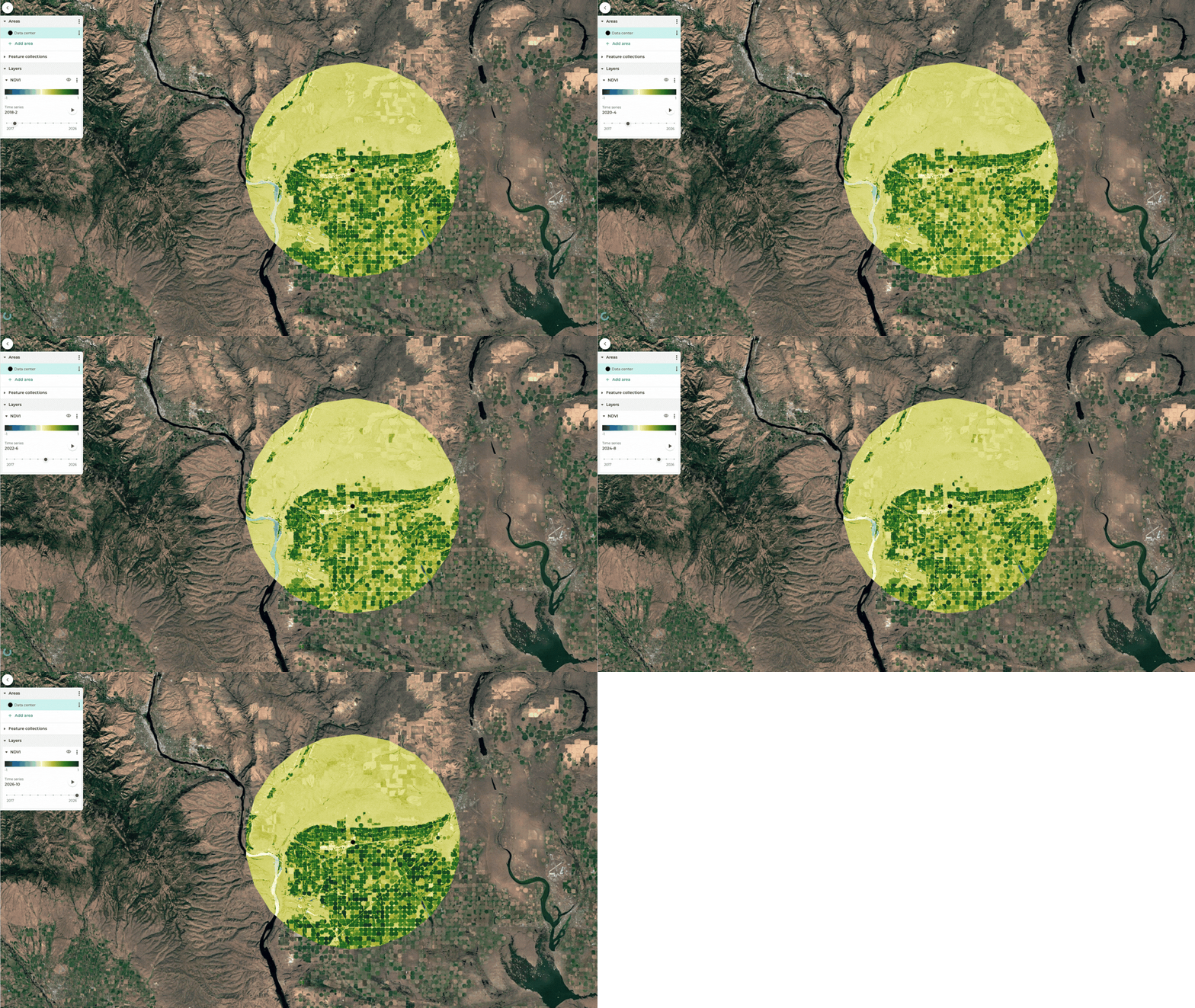
Monitor change over time on Earth Blox.
4. Quantify: connect nature-related risk with business decisions
Environmental risks become far more meaningful when translated into financial language.
Approaches such as Nature Value at Risk (NVaR) can help organisations estimate potential exposure associated with ecosystem degradation and other nature-related risks.
This can support internal investment decisions, strengthen business cases for resilience measures and help demonstrate materiality to lenders and investors.
Applied carefully, financial quantification helps businesses prioritise where investigation or intervention is warranted, and communicate material risk in terms that finance, risk and leadership teams already use.
It also helps move nature out of a sustainability silo. When environmental exposure can be connected with assets, operations and potential financial implications, it becomes information that the C-suite and wider business can use in decision-making.
5. Evidence: make your nature risk profile usable
The final step is turning analysis into evidence that others can understand, interrogate and use.
Internal risk teams need to know which assets require further investigation. Operations and procurement teams need information they can act on. Sustainability teams need support for nature-related assessment and disclosure. Boards need to understand material exposure. Lenders and investors need detail when questions arise about particular assets, commodities or sourcing locations.
This enables the business to explain:
Where assets and relevant supply-chain activities are located;
Which environmental datasets and indicators were used;
Where potential exposure has been identified;
How significant risks are being investigated and managed;
How relevant environmental change is being monitored; and
What evidence supports each conclusion presented.
This is why method transparency matters. Earth Blox is built on traceable methodology rather than black-box scoring, so you can examine and explain results.
How well do you understand your nature risk profile?
See how Earth Blox can help you locate, assess, quantify, monitor and evidence nature-related risks across your assets and supply chains and give your teams the information they need before questions arise from lenders, investors or other stakeholders.
As former lead of PwC UK’s Nature Analytics team, Ben brings extensive experience in nature and climate analytics, having led the largest corporate pilot for TNFD and contributed to Business for Nature’s Strategy Handbook.


.gif)